Safety
Child car seats in the UK: the rules, the labels and the exceptions
UK child car seat law in plain terms: 135cm or 12 years, the R129 and ECE R44 labels, rear facing until 15 months, and the taxi and short journey exceptions.
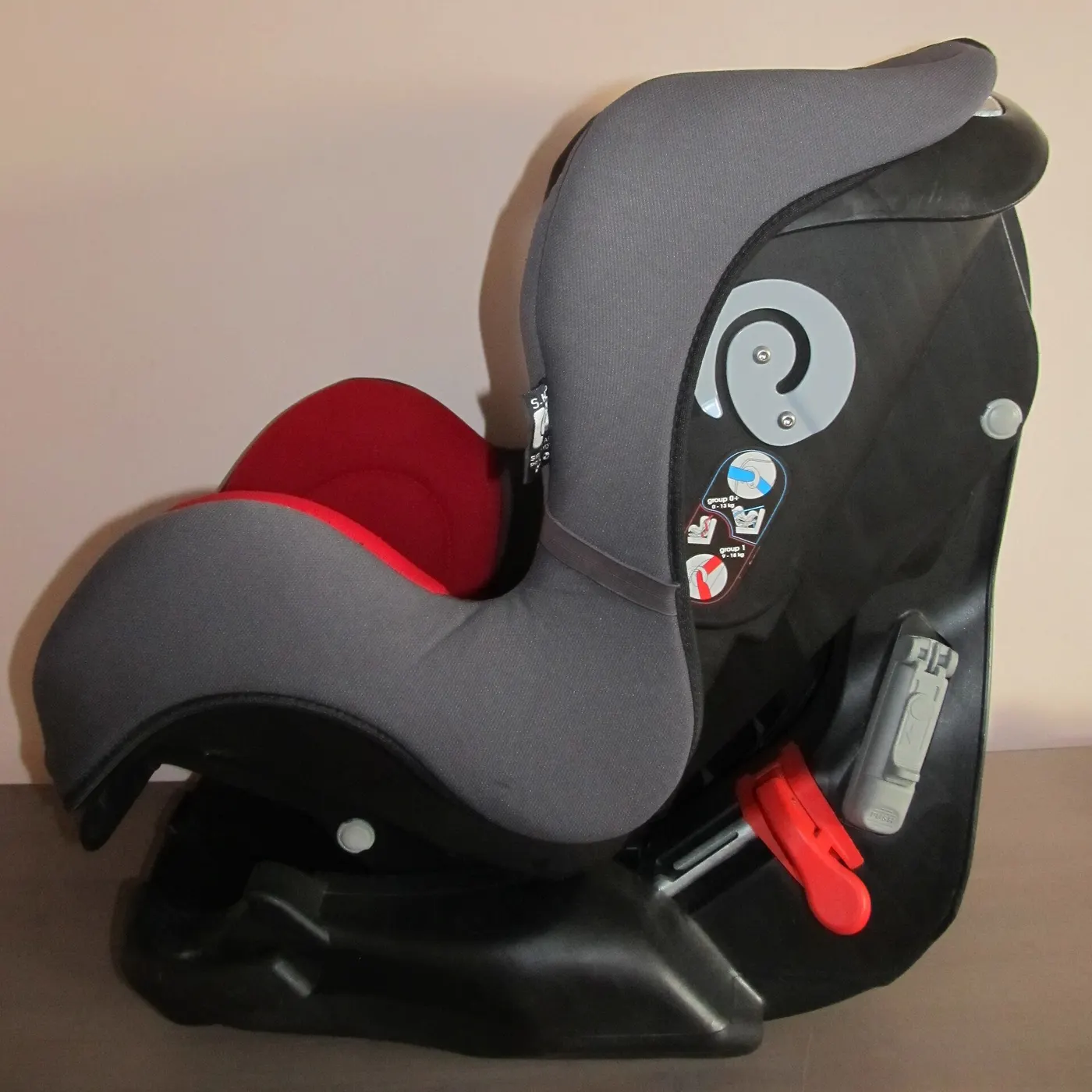
Everything in this guide that concerns safety comes from GOV.UK's own pages on child car seat law, quoted rather than paraphrased from memory, and from the Office for Product Safety and Standards recall notices. Where the law sets a number, the number is here; where it does not, this guide says so rather than filling the gap.
The structure is deliberately dull: what the law requires, how to read the label on a seat, what the exceptions actually are, and how to check whether a seat you already own has been recalled. None of it needs a product recommendation, and this site makes none.
The rule that covers almost every journey
GOV.UK sets the headline requirement in one sentence: "Children must normally use a child car seat or booster seat until they're 12 years old or 135 centimetres tall, whichever comes first." Both limbs matter. A tall nine-year-old who passes 135 centimetres is out of the requirement; a small twelve-year-old reaches the age limit instead.
The seat has to be approved, and approval is visible on a label rather than in a brochure. GOV.UK describes two families of approval, and the distinction decides which rules apply to the seat in front of you.
Both families remain lawful to use. What has changed is what manufacturers may newly place on the market, and GOV.UK notes that "Manufacturers can now only make booster cushions approved as group 3." A group 2 booster cushion already in your car is not made unlawful by that, but it is not the shape the market is being steered towards.
| Family | Label to look for | How the seat is selected | Rear-facing requirement |
|---|---|---|---|
| Height-based | A capital 'E' in a circle and 'R129' | By the child's height | Rear facing until the child is over 15 months old |
| Weight-based | A capital 'E' in a circle and 'ECE R44' | By the child's weight group | Set by the group the seat is approved for |
GOV.UK lists the weight groups as 0 to 10 kg, 0 to 13 kg, 9 to 18 kg, 15 to 25 kg and 22 to 36 kg, and states whether each is rear or forward facing and what restraint types apply.
Reading the label before you read the box
An approval label is a small orange or white sticker on the shell or the base, and it is the only part of a car seat that carries a legal meaning. GOV.UK's description is specific: height-based seats "have a label showing a capital 'E' in a circle and 'R129'", and weight-based seats "have a label showing a capital 'E' in a circle and 'ECE R44'".
That is the test to apply in a shop, at a car boot sale or when a seat is handed down. A seat with no circled E, or with no R129 or ECE R44 marking, is not a seat the GOV.UK guidance describes as approved, whatever the packaging claims about testing.
Photograph the label when the seat is installed. It takes 10 seconds, it gives you the approval marking and the model identifiers in one image, and it is what you will want when you come to check the recall notices described below.
- Find the approval label on the shell or base before looking at the price
- Confirm a capital 'E' in a circle, and either 'R129' or 'ECE R44'
- For an R129 seat, note the height range it is approved for
- For an ECE R44 seat, note the weight group, which GOV.UK lists as 0 to 10 kg, 0 to 13 kg, 9 to 18 kg, 15 to 25 kg or 22 to 36 kg
- Photograph the whole label, including the small print, and keep the image
The exceptions, and how narrow they are
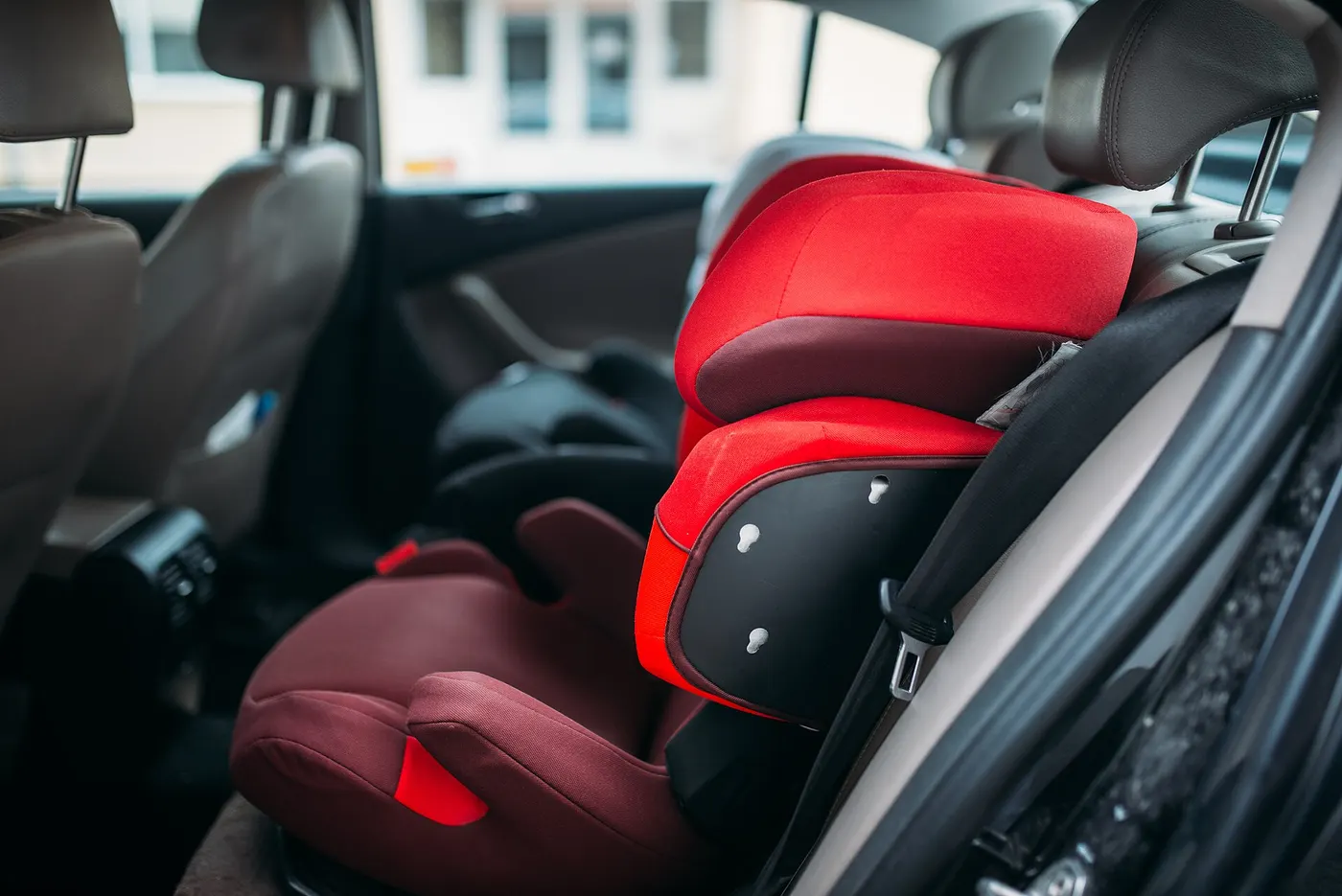
GOV.UK sets out defined situations in which a child may travel without a child car seat, and they are narrower than they are usually remembered. In a licensed taxi or minicab where the driver does not provide the correct seat, a child may travel without one, but only on a rear seat, wearing an adult seat belt if they are 3 or older, or without a seat belt if they are under 3.
For an unexpected journey, GOV.UK states that a child aged 3 or older may use an adult seat belt if the journey is all of the following: unexpected, necessary, and over a short distance. All three conditions have to hold together. A child under 3 cannot be taken on an unexpected journey without the correct seat unless it is a licensed taxi or minicab and the child travels on a rear seat without a seat belt.
Where there is no room for a third child car seat in the back, GOV.UK states that a child under 3 must still be in a child car seat, and that the child must travel in the front seat with the correct child car seat. The exception creates a different seat position, not a seat-free journey.
| Situation | Child aged 3 or over | Child under 3 |
|---|---|---|
| Licensed taxi or minicab with no correct seat provided | Rear seat, wearing an adult seat belt | Rear seat, without a seat belt |
| Unexpected, necessary and short journey in another vehicle | May use an adult seat belt | Not permitted without the correct seat |
| No room for a third child car seat in the back | Rules on seat belts apply | Must travel in the front seat with the correct child car seat |
The unexpected-journey exception requires the journey to be unexpected, necessary and over a short distance, all at once. GOV.UK does not define the distance in kilometres, so the condition is read as a whole rather than as a mileage limit.
Checking a seat you already own
Recalls are published, free to search and routinely ignored. The Office for Product Safety and Standards publishes product recalls, product safety reports and product safety alerts on GOV.UK. Recalls cover specific products sold in the UK and may require you to act to receive a free replacement, repair or refund.
The database covers general consumer products and excludes food and drink, vehicles, medicines and medical devices, which have their own channels. Each notice identifies the product by name and model number and describes the nature of the risk, which is why the photograph of the label is worth taking at installation rather than at the moment you need it.
Make it a diary entry rather than a reaction to a news story. Checking twice a year takes about 5 minutes and covers the two seats, the pushchair and the carrier in a typical household.
Fitting is where an approved seat stops being safe
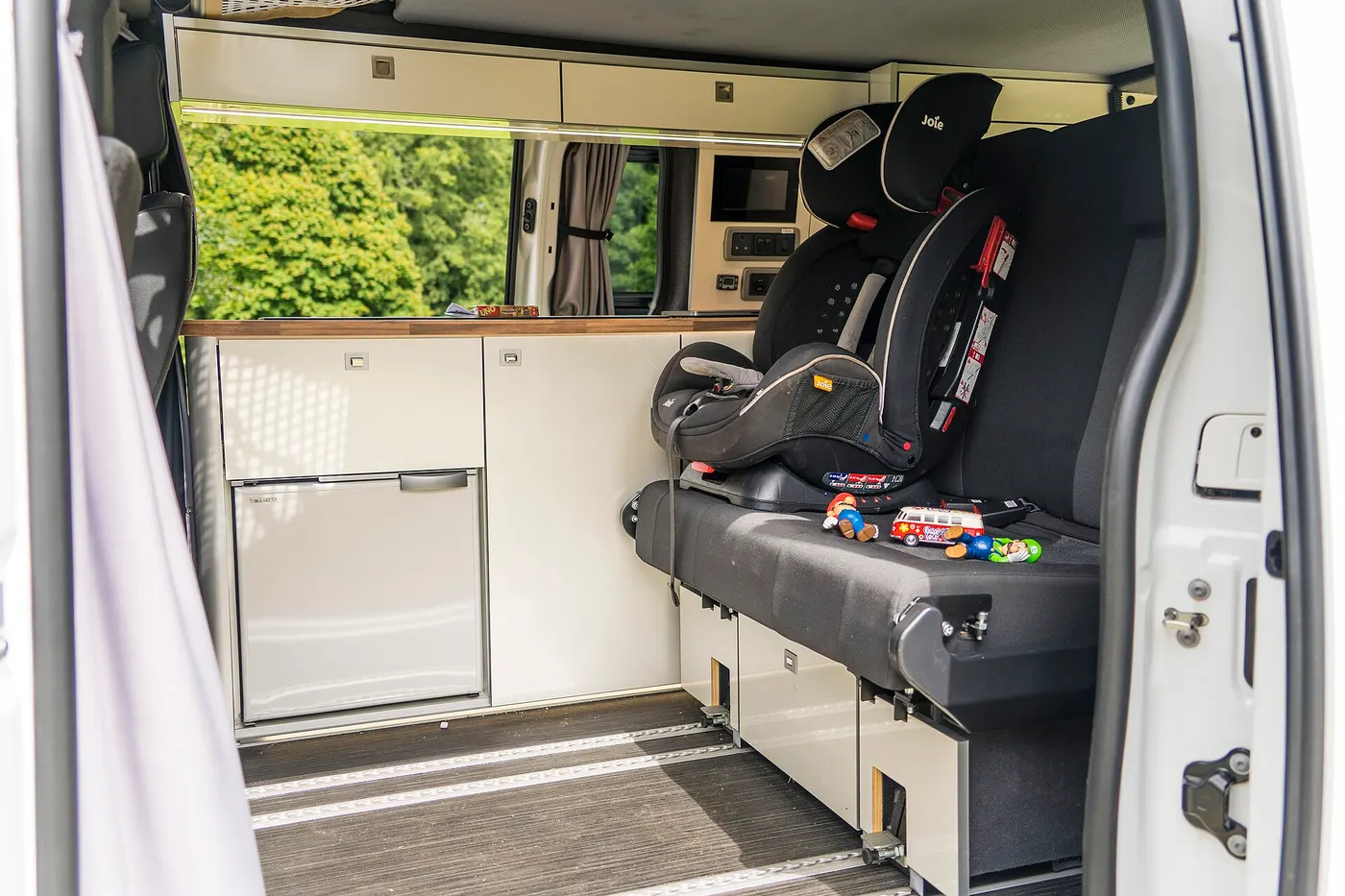
Approval describes the seat. It does not describe the seat as fitted in your car, and the fitting is where most of the risk sits. The questions worth answering before a journey are mechanical and visible: is the belt path the one marked on the shell, is the belt flat rather than twisted along its whole run, and does the seat move more than a small amount when pushed firmly at the belt path.
Harness position is the second check. On a rear-facing seat the straps should come from at or below shoulder level, and on a forward-facing seat at or above. Seats that let you move the harness slots without rethreading the webbing make this a 30-second adjustment rather than a monthly argument, which matters because a child grows between one check and the next.
The third check is the one adults forget on themselves. A child in a correctly fitted seat behind an unbelted adult is sharing a cabin with an unrestrained mass, so the seat belt audit covers everyone in the car, every time.
- The belt follows the marked path on the shell, with no twist anywhere along it
- The seat does not move freely when pushed firmly at the belt path
- Harness straps sit at or below the shoulders rear facing, at or above forward facing
- The harness is tightened so that the webbing lies flat against the chest
- Everyone else in the car is belted, including rear passengers
- The approval label is photographed and the recall list checked twice a year
Before you buy
- Find the approval label and confirm a capital E in a circle with R129 or ECE R44
- Note the height range for an R129 seat, or the weight group for an ECE R44 seat
- Keep a height-based seat rear facing until the child is over 15 months old
- Photograph the full label at installation and keep the image
- Check the OPSS product safety notices on GOV.UK twice a year, about 5 minutes each time
- Confirm the belt runs along the marked path with no twist and the seat does not move freely
- Set harness slots at or below the shoulders rear facing, at or above forward facing
- Belt every adult in the car on every journey, not only the driver
Questions readers ask
- Until what age or height is a car seat legally required?
- GOV.UK states that children must normally use a child car seat or booster seat until they are 12 years old or 135 centimetres tall, whichever comes first. The two limbs operate together, so whichever a child reaches first ends the requirement. Separate seat belt rules still apply after that, and the exceptions set out on GOV.UK for taxis and unexpected journeys sit outside the general rule.
- How long must a height-based seat stay rear facing?
- GOV.UK says that height-based seats must be rear facing until a child is over 15 months old, and that a child can use a forward-facing child car seat when they are over 15 months old. That is the minimum the guidance sets for R129 seats; many seats are approved to stay rear facing for longer, which is stated on the seat's own approval label.
- Can my child go in a taxi without a car seat?
- GOV.UK sets out that if the driver does not provide the correct child car seat, children can travel without one, but only on a rear seat, wearing an adult seat belt if they are 3 or older, or without a seat belt if they are under 3. It is an exception tied to licensed taxis and minicabs, not a general permission for any car journey.
- What does the circled E on the label mean?
- It is the approval mark GOV.UK tells you to look for. Height-based seats carry a label showing a capital E in a circle together with R129, and weight-based seats carry a capital E in a circle together with ECE R44. A seat without one of those markings is not described by GOV.UK as approved, regardless of what the box or the listing says.
- How do I find out whether a seat has been recalled?
- Search the product safety notices the Office for Product Safety and Standards publishes on GOV.UK. They cover recalls, safety reports and safety alerts for consumer products sold in the UK, identify products by name and model number, and say what action to take, which may be a free replacement, repair or refund. Food, vehicles, medicines and medical devices are handled elsewhere.
- Is a booster cushion still allowed?
- GOV.UK states that manufacturers can now only make booster cushions approved as group 3. That constrains what is newly placed on the market rather than retrospectively prohibiting a cushion you already own. The general requirement still governs: a child normally needs a child car seat or booster seat until 12 years old or 135 centimetres, whichever comes first.
Sources
- GOV.UK — Child car seats: the law (135cm or 12 years, R129 and ECE R44 labels, rear facing until over 15 months, weight groups) — checked 2026-11-03
- GOV.UK — Child car seats: the law: when a child can travel without a car seat (taxi, unexpected journey and third-seat exceptions) — checked 2026-11-03
- GOV.UK — Product recalls and alerts, published by the Office for Product Safety and Standards — checked 2026-11-03
Advertising is not enabled on this site yet. When it is, ads will be labelled and kept visually separate from the guides.